
Recent New York Times coverage spotlights evolving menu trends and accessibility‚ stemming from a Texas feature and highlighting Houston’s dining scene‚ alongside broader inclusivity efforts.
Notably‚ the focus extends to ensuring dining experiences are accessible for all‚ particularly those with visual impairments‚ as demonstrated by initiatives in Ohio and Mangaluru.
The NYT’s Focus on Menu Trends
The New York Times’ recent exploration of restaurant menus began with a somewhat controversial piece focusing on Texas cuisine‚ prompting a necessary recalibration towards a more nuanced and inclusive approach. This initial coverage‚ while sparking discussion‚ underscored the importance of avoiding stereotypical representations of regional food cultures.
Subsequently‚ the NYT shifted its attention to broader menu trends across the United States‚ with a particular emphasis on the vibrant culinary landscape of Houston. This involved analyzing menu offerings‚ pricing strategies‚ and the overall dining experience. The team’s investigation extends beyond simply listing dishes; it delves into the stories behind the menus and the chefs who create them.
Crucially‚ the NYT’s current focus isn’t solely on what’s on the menu‚ but how it’s presented‚ and who can access it. This broadened perspective acknowledges the growing demand for accessibility features‚ recognizing that a truly exceptional dining experience must be inclusive of all patrons‚ regardless of their abilities.
Accessibility as a Growing Concern

The New York Times’ coverage implicitly highlights a significant shift in the restaurant industry: a growing awareness of accessibility needs. This isn’t merely a matter of compliance‚ but a recognition that inclusive dining experiences are ethically and economically sound.
Specifically‚ the challenges faced by visually impaired individuals when navigating traditional menus are brought to the forefront. The article referencing an Ohio State organization underscores proactive efforts to address this issue‚ demonstrating a commitment to ensuring everyone can participate fully in the dining experience.
Furthermore‚ the Young Indians (Yi) initiative in Mangaluru exemplifies a global movement towards greater inclusivity. By promoting Braille menus‚ Yi is actively working to break down barriers and empower visually impaired diners. This demonstrates a growing understanding that accessibility is not a niche concern‚ but a fundamental aspect of hospitality.
Decoding Restaurant Menus: A Comprehensive Guide
Understanding how restaurants present options—from design to language—profoundly impacts customer choices‚ and the NYT’s analysis reveals the psychology behind these strategic presentations.
Menu Design & Psychology
Restaurant menu design isn’t arbitrary; it’s a carefully orchestrated blend of psychology and marketing. The New York Times’ exploration of menu trends implicitly acknowledges this‚ as subtle choices in font‚ color‚ and layout significantly influence diner perceptions and ordering habits.
Strategic placement of high-profit items‚ the use of evocative descriptions‚ and even the sheer length of a menu all play a role. Eye-tracking studies reveal diners often focus on the upper-right corner first‚ making it prime real estate for featured dishes.
Furthermore‚ the use of imagery—or the deliberate absence of it—can impact perceived value and quality. Understanding these psychological principles is crucial for restaurants aiming to maximize revenue and enhance the overall dining experience‚ a point subtly underscored by the NYT’s broader coverage.
The Impact of Menu Language on Ordering
The language employed on restaurant menus wields considerable power over customer choices‚ extending beyond simple descriptions. As the New York Times examines menu trends‚ the subtle art of persuasive wording becomes apparent. Terms like “farm-fresh‚” “artisanal‚” or “locally sourced” evoke positive associations‚ influencing perceived quality and justifying higher price points.
Moreover‚ avoiding negative language – for example‚ phrasing as “succulent” rather than “not dry” – creates a more appealing impression. Menu descriptions that tell a story or highlight unique ingredients can also increase order rates.
Ultimately‚ the NYT’s coverage implicitly suggests that menu language isn’t merely informative; it’s a strategic tool used to shape diner expectations and drive sales‚ impacting the entire restaurant experience.
Accessibility Features in Restaurant Menus
Driven by inclusivity concerns‚ restaurants are increasingly adopting features like Braille‚ large print‚ and digital menus with screen reader compatibility‚ as highlighted by recent coverage.
Braille Menus: Implementation & Availability
The push for Braille menus represents a significant‚ though often challenging‚ step towards restaurant inclusivity. The Young Indians (Yi) – Yuva Accessibility initiative in Mangaluru actively approaches restaurants‚ offering Braille menu options to support visually impaired diners.
However‚ widespread implementation remains uneven; While commendable‚ the availability of Braille menus isn’t yet standard practice nationally. Restaurants face hurdles including the cost of production‚ menu updates requiring re-transcription‚ and ensuring staff are aware of their availability.
Despite these challenges‚ the initiative demonstrates a growing awareness and commitment to providing equitable dining experiences. Increased advocacy and potential subsidies could further encourage broader adoption‚ making menus truly accessible to all patrons.
Large Print Menus for Visually Impaired Customers
Alongside Braille options‚ large print menus offer a more readily implementable solution for visually impaired customers. This approach requires less specialized production than Braille‚ simply involving increasing font sizes and utilizing high-contrast color schemes for improved readability.
The Main Menu organization‚ highlighted in recent coverage‚ champions this accessibility feature‚ aiming to ensure everyone has a place at the table. Restaurants can easily adapt existing menus to include a large print version‚ often as a supplemental offering.
While not a complete solution for all visual impairments‚ large print menus significantly benefit individuals with low vision‚ providing greater independence and a more enjoyable dining experience. This practical step demonstrates a commitment to inclusivity without substantial financial burden.
Digital Menus & Screen Reader Compatibility
The increasing prevalence of digital menus presents a significant opportunity to enhance accessibility for visually impaired diners. However‚ simply offering a digital menu isn’t enough; it must be designed with screen reader compatibility in mind.

QR codes‚ as emerging solutions‚ can link directly to these accessible digital menus‚ streamlining the process for customers. Restaurants should prioritize testing their digital menus with various screen readers to guarantee functionality and inclusivity‚ fostering a welcoming environment for all patrons.

NYT Articles & Regional Menu Trends
The New York Times’ recent reporting analyzes Texas menu stereotypes‚ then shifts focus to Houston’s diverse culinary landscape and broader national menu evolutions.

Analysis of Texas Menu Stereotypes (and the NYT’s Response)
Initially‚ the New York Times faced some criticism for a feature perceived as relying on stereotypical portrayals of Texas cuisine‚ potentially overemphasizing barbecue and Tex-Mex tropes. This sparked discussion about responsible food journalism and the importance of nuanced regional representation.
The team acknowledged the concerns and responded by pivoting towards a more comprehensive exploration of Texas’ diverse culinary scene‚ moving beyond simplistic categorizations. This involved highlighting innovative restaurants and chefs challenging traditional expectations.
This incident served as a catalyst for a broader examination of how menus themselves can perpetuate or subvert regional stereotypes. The NYT’s subsequent coverage demonstrated a commitment to presenting a more accurate and inclusive picture of Texas’ food culture‚ acknowledging its complexity and dynamism.
Houston Restaurant Menu Highlights (as per NYT coverage)
The New York Times’ coverage of Houston’s restaurant scene reveals a vibrant and diverse culinary landscape‚ extending far beyond typical Texan fare. Reports emphasize a strong Vietnamese influence‚ with menus showcasing authentic pho‚ banh mi‚ and regional specialties gaining prominence.
Furthermore‚ the city’s burgeoning international food scene is highlighted‚ including innovative Latin American cuisine and upscale dining experiences blending global flavors. The NYT specifically notes restaurants pushing boundaries with creative menu offerings and unique ingredient combinations.
Notably‚ the accessibility of diverse cuisines is a recurring theme‚ with menus catering to a wide range of dietary needs and preferences. This showcases Houston as a culinary hub embracing inclusivity and innovation‚ offering a dynamic dining experience for all.
Technological Solutions for Menu Accessibility
Innovative solutions like QR codes linking to accessible digital menus and specialized menu scanning apps are emerging‚ empowering visually impaired diners with greater independence.
QR Codes Linking to Accessible Digital Menus
The integration of QR codes presents a cost-effective and rapidly deployable solution for enhancing menu accessibility. Restaurants can now easily link physical QR codes‚ prominently displayed on tables‚ directly to their digital menus.
Crucially‚ these digital menus aren’t simply reproductions of the printed version; they can be specifically designed with accessibility in mind. This includes features like adjustable font sizes‚ high contrast color schemes‚ and compatibility with screen readers – vital tools for visually impaired individuals.
Furthermore‚ the digital format allows for dynamic updates‚ ensuring menu information is always current. This approach bypasses the limitations and expense of producing multiple physical menus in different formats‚ like Braille or large print‚ offering a scalable and inclusive dining experience for everyone.
The New York Times’ coverage implicitly supports this trend‚ highlighting the need for restaurants to proactively address accessibility challenges.
Menu Scanning Apps for Visually Impaired Diners
Emerging technology offers innovative solutions for visually impaired diners‚ with menu scanning applications taking center stage. These apps utilize smartphone cameras to capture images of restaurant menus‚ then employ Optical Character Recognition (OCR) to convert the text into a digitally readable format.
Importantly‚ many of these apps feature text-to-speech functionality‚ allowing the menu content to be audibly narrated to the user. Advanced applications also offer customizable font sizes‚ color contrast adjustments‚ and voice control for a personalized experience.
The Ohio State organization mentioned in recent reports exemplifies the growing commitment to ensuring inclusive dining. While the New York Times hasn’t directly focused on these apps‚ their broader coverage of accessibility issues underscores the importance of such technological advancements in creating equitable dining experiences for all patrons.
These apps empower diners with independence and choice.
The Role of Young Indians (Yi) in Promoting Accessibility
The Young Indians (Yi) organization‚ through its Yuva Accessibility initiative in Mangaluru‚ actively promotes inclusivity by offering Braille menus to local restaurants.
Yi’s Yuva Accessibility Initiative in Mangaluru
The Mangaluru Chapter of Young Indians (Yi) is spearheading a significant accessibility drive through its Yuva Accessibility initiative. Recognizing the challenges faced by visually impaired individuals when dining out‚ Yi is proactively engaging with restaurants across the city.
Their core strategy involves offering and facilitating the adoption of Braille menus. This isn’t simply a donation; it’s a collaborative effort to educate restaurant owners about the importance of inclusive practices and the positive impact on their customer base.
Yi members are actively reaching out‚ explaining the benefits of Braille menus‚ and assisting with the implementation process. This initiative aims to empower visually impaired individuals to enjoy independent dining experiences‚ fostering a more inclusive and welcoming environment within Mangaluru’s vibrant culinary landscape.
Ultimately‚ the Yuva Accessibility initiative demonstrates Yi’s commitment to social responsibility and creating a more equitable society.
Expanding Braille Menu Adoption in Indian Restaurants
Building upon the success of the Yuva Accessibility initiative in Mangaluru‚ a broader movement is emerging to encourage Braille menu adoption across Indian restaurants nationwide. While currently limited‚ awareness of the need for inclusive dining options is steadily growing.
Yi’s efforts serve as a model for other chapters and organizations‚ demonstrating a practical and effective approach to improving accessibility. The focus extends beyond simply providing menus; it involves educating restaurant staff and fostering a culture of inclusivity.
Challenges remain‚ including the cost of Braille menu production and the perceived logistical hurdles for smaller establishments. However‚ advocates are exploring cost-effective solutions and highlighting the positive public relations benefits of embracing accessibility.
The long-term goal is to make Braille menus a standard feature in restaurants throughout India‚ ensuring equal dining opportunities for all.
Future Trends in Restaurant Menu Accessibility
Emerging technologies promise personalized experiences‚ with AI translating menus and offering dietary-specific recommendations‚ revolutionizing accessibility and enhancing dining for everyone.
AI-Powered Menu Translation & Description
Artificial intelligence is poised to dramatically reshape menu accessibility‚ moving beyond simple translation to provide detailed descriptions for diners with diverse needs. Imagine an AI instantly converting a menu into multiple languages‚ but also generating audio descriptions of each dish for visually impaired customers.
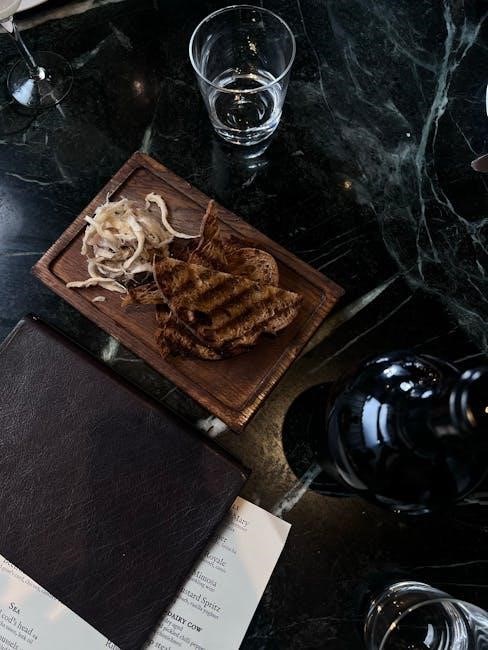
Furthermore‚ AI could analyze ingredient lists and flag potential allergens‚ catering to those with dietary restrictions. This technology could even personalize menu recommendations based on a diner’s preferences and health requirements‚ creating a truly inclusive experience. The New York Times’ exploration of menu trends suggests a growing awareness of these needs.
Currently‚ the focus is on basic accessibility features‚ but AI offers the potential for dynamic‚ customized menus that adapt to each individual‚ ensuring everyone can confidently navigate the dining experience. This represents a significant leap forward in inclusive restaurant practices.
Personalized Menu Recommendations Based on Dietary Needs
Building upon the advancements in AI‚ future restaurant menus will likely offer highly personalized recommendations tailored to individual dietary needs and preferences. This goes beyond simply identifying allergens; it encompasses considerations for health conditions‚ ethical choices (vegetarian‚ vegan)‚ and even flavor profiles.
Imagine a system where a diner inputs their dietary restrictions – gluten-free‚ low-sodium‚ diabetic-friendly – and the menu dynamically filters and highlights suitable options. The New York Times’ coverage of evolving menu trends hints at this growing demand for customization.
Moreover‚ AI could suggest modifications to existing dishes to accommodate specific needs‚ or even create entirely new recommendations based on a diner’s profile. This level of personalization promises a more enjoyable and stress-free dining experience for everyone.